How to Crochet With Plastic Bag Plarn: Best Stitches and Hook Sizes
Crocheting with plarn turns throwaway plastic bags into strong, washable material for totes, mats, baskets, and other sturdy pieces. Plarn is simply plastic bag yarn made by cutting bags into strips and linking them together.
If you still need to make your strips, use the plarn prep checklist before you start. Once your plarn is ready, crocheting with it gets much easier. Here’s how to crochet with plarn, which basic stitches work best, and what hook sizes usually feel easiest in your hands.
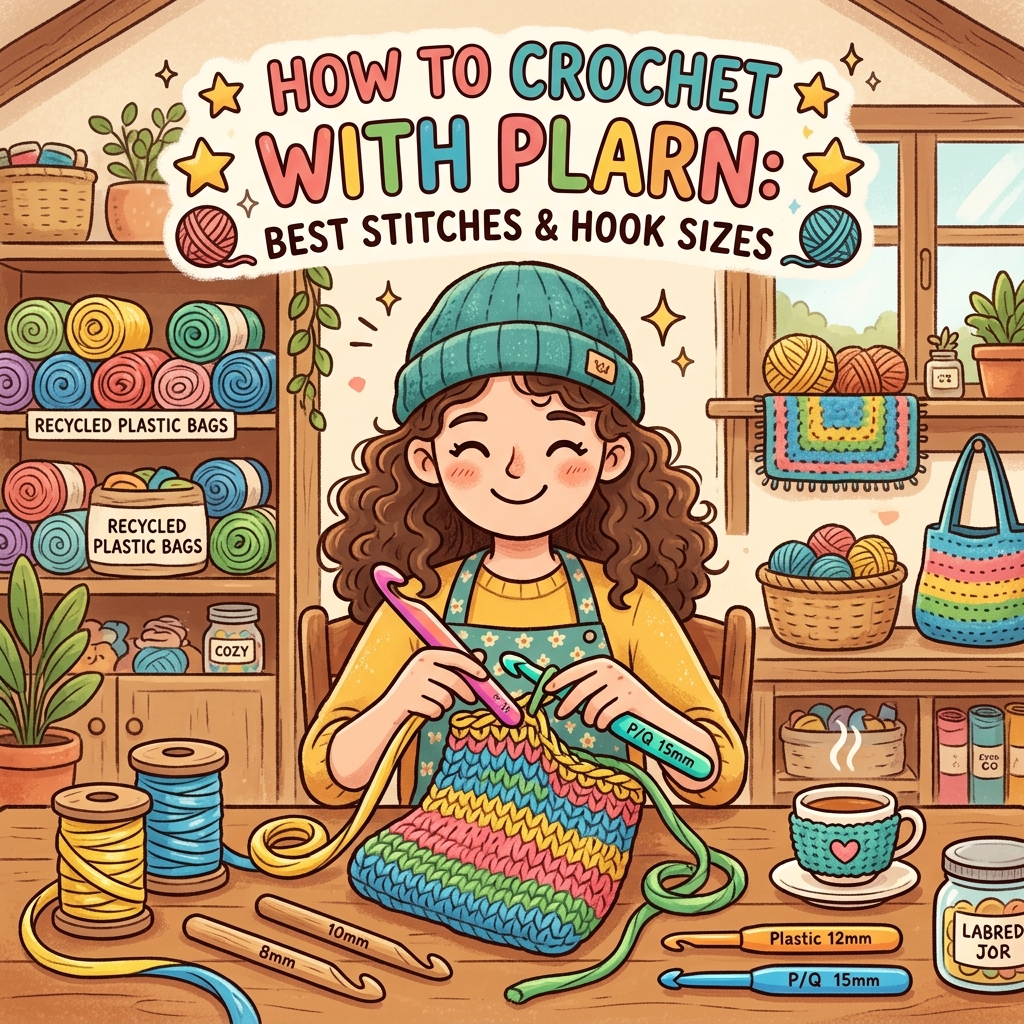
What makes plarn different from yarn when you crochet
Plarn doesn’t behave like soft cotton or acrylic yarn. It can feel slick, stiff, crinkly, or springy, depending on the bags you used. Because of that, your hook may glide through one section and catch on the next.
That difference matters right away. When you crochet plastic bag strips, the material often has less give than yarn. It also shows rough tension fast. If your loops are too tight, the plastic resists you. If they’re too loose, the fabric can look messy or floppy.
The cut of the bags also changes the feel. Wide strips make thick plarn. Narrow strips make thinner plarn, but they may stretch more or snap sooner. In other words, there isn’t one perfect formula for every batch.
So, keep your first project simple. Work a little slower than usual. Choose stitches that are easy to see. Also, make a small test swatch before you commit to a full bag or mat. That short step tells you a lot.
Why your tension matters more with plarn
Tension can make or break a plarn project. Tight hands create tight loops, and tight loops are hard to pull through with plastic. That can tire your fingers fast and make the work curl.
Instead, aim for a loose, even grip. Let the hook do more of the work. If the plarn squeaks or drags, pause and loosen your hands. A calmer rhythm helps the hook slide and keeps the stitches more uniform.
If plarn feels stubborn, don’t fight it. Size up your hook first, then soften your grip.
The best kinds of projects for a first plarn crochet try
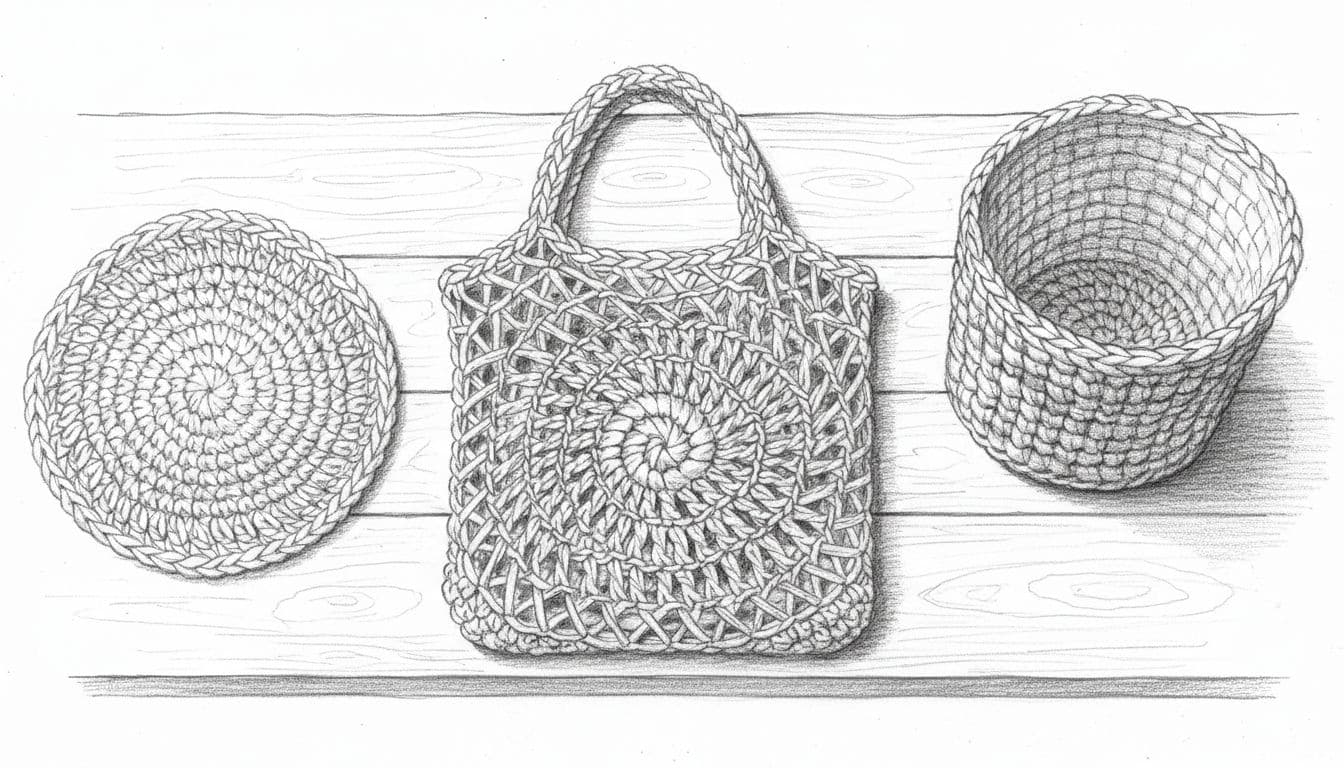
Some projects give beginners more room for error. A market bag, flat mat, simple basket, or small holder works well because the material already has body. You don’t need delicate shaping to get a useful result.
These projects also suit basic stitches. A tote can look great in single crochet or half double crochet. A mat works well with dense rows that lie flat. Small baskets benefit from plarn’s stiffness, so they can hold shape without extra support.
If you want your first crochet plastic bag project to feel doable, start small and useful. Think less “perfect finish,” more “solid practice piece.”
The basic crochet stitches that work best with plarn
With plarn, simple stitches win. They’re easier to see, easier to repeat, and easier to fix if something goes wrong. That matters because plastic strips can twist, flatten, or catch in ways soft yarn doesn’t.
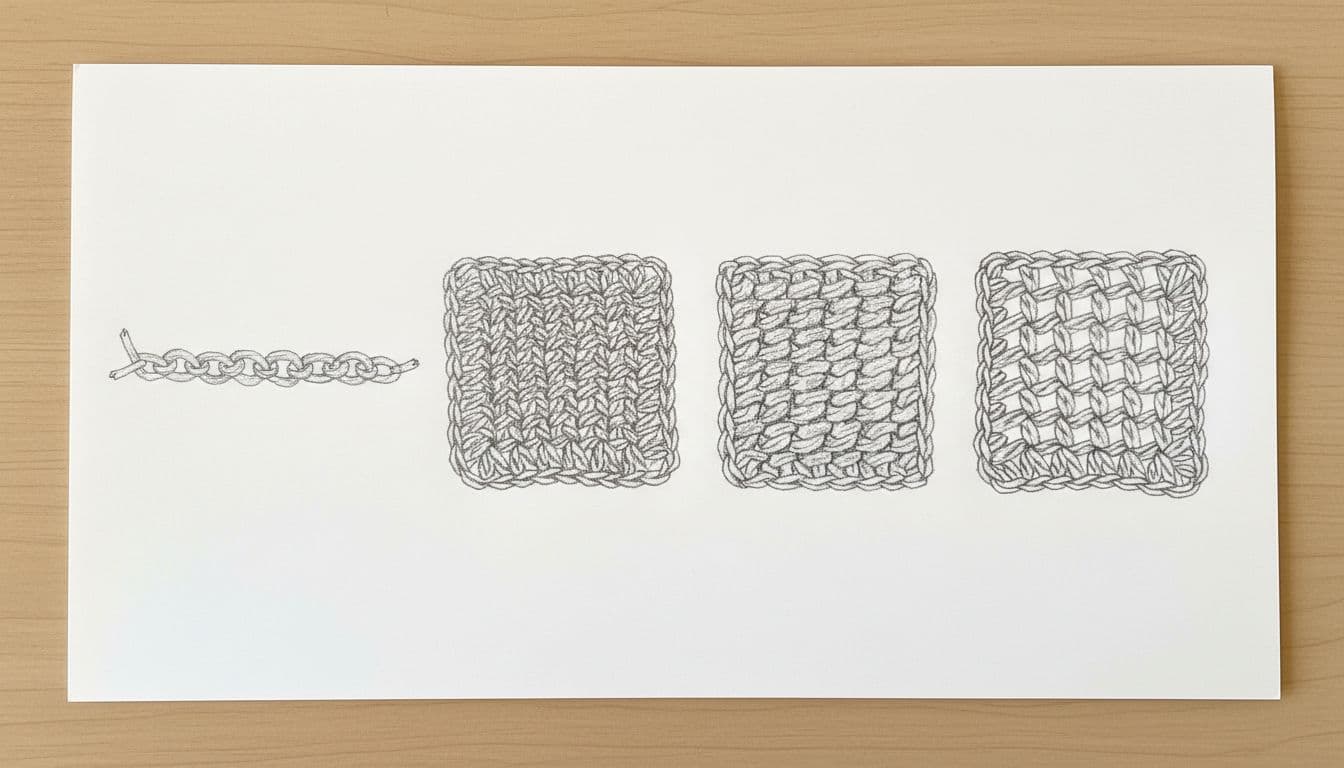
For most beginners, four stitches cover almost everything you need: chain stitch, single crochet, half double crochet, and double crochet. Each one changes the feel of the finished fabric. The same four stitches also work with t-shirt yarn, so you can switch materials without learning a new stitch.
Chain stitch and single crochet for strong, simple fabric
The chain stitch starts almost every crochet project, and plarn is no different. Use it for your foundation, but keep those first chains loose. If your starting chain is too tight, every row after it feels harder.
Single crochet is often the best first stitch for plarn. It creates a dense, sturdy fabric, which is great for tote bags, baskets, mats, and small bins. It also keeps the plastic from stretching too much under weight.
Another plus, single crochet helps hide some unevenness in the plarn itself. If one strip is slightly wider than the next, the shorter stitch height keeps the change from standing out as much.
Half double crochet and double crochet when you want more speed
Half double crochet is a nice middle ground. It grows faster than single crochet, but it still gives decent structure. For bags and roomy holders, that balance often works well.
Double crochet moves even faster, so it helps on large projects like shopping totes or broad mats. The fabric also feels more flexible. That can be useful if you want drape instead of stiffness.
Still, taller stitches show flaws more clearly. If your plarn thickness changes a lot, double crochet may highlight those bumps and gaps. So if your strips are uneven, half double crochet is often the safer step up.
Which stitches to avoid until you get used to plarn
Skip tight textures at first. Puff stitches, bobbles, and heavily layered patterns can feel awkward with plastic. They take more pulling, more twisting, and more patience.
It also helps to avoid fine lace or hard-to-read stitch combinations. Because plarn has shine and stiffness, the loops can blend together. If you can’t read your stitches easily, fixing mistakes gets frustrating fast.
Start with what you can see and repeat. Once your hands get used to the material, you can test more detailed patterns later.
What size crochet hook should you use for plarn
Hook size depends on one thing above all, the thickness of your plarn. Thin strips can work with smaller hooks. Thick, chunky plarn usually needs a larger hook so you can pull loops through without strain.
For many beginners, a good starting range is K, 6.5 mm to N, 10 mm. That range works for a lot of grocery bag plarn, especially for bags, baskets, and mats. Still, the best choice comes after a swatch, not before it.
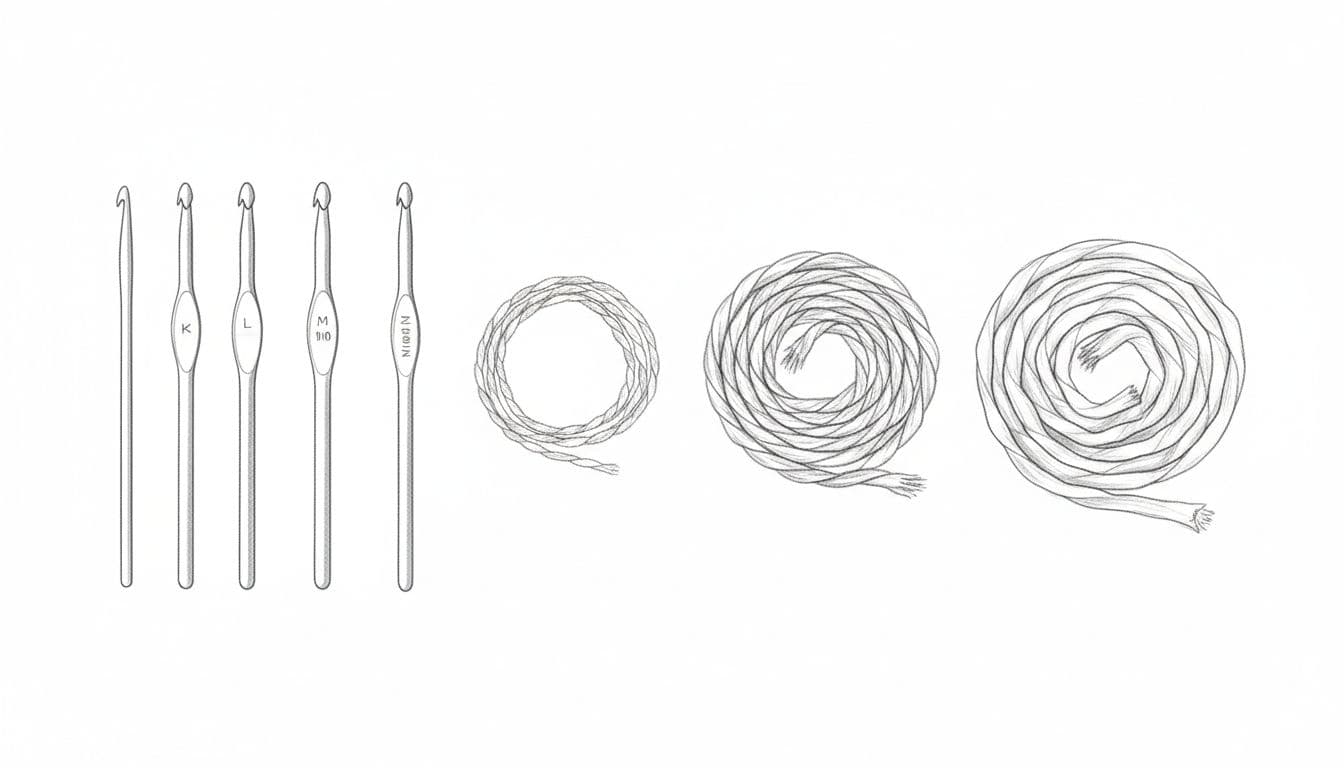
This quick guide gives you a starting point.
| Plarn feel | Good starting hook | What to expect |
|---|---|---|
| Thin and soft | J to K, 6 mm to 6.5 mm | More control, tighter fabric |
| Medium thickness | K to M, 6.5 mm to 9 mm | Balanced structure and ease |
| Thick and stiff | M to N, 9 mm to 10 mm | Easier pulling, looser fabric |
The main takeaway is simple: start in the middle, then adjust after a swatch.
A simple way to match hook size to your plarn thickness
Hold your plarn next to the hook shaft, not the tip. If the strip looks bulky against the shaft and barely bends, try a larger hook. If it looks thin and floppy, a smaller hook may give you better control.
Then crochet a few rows. Watch how the loops move. If the hook catches every stitch or you have to tug, size up. If the fabric has big holes and won’t hold shape, size down.
This test doesn’t take long. Yet it saves a lot of hand strain later.
Signs your hook is too small or too large
A too-small hook gives clear warning signs. Your hands get sore early. The plarn splits or twists while you pull through. Loops feel sticky and hard to lift off the hook. You may also see curling, because the stitches are packed too tightly.
A too-large hook causes a different set of problems. The fabric looks loose and gap-heavy. Baskets slump. Bags stretch more than you want. Rows can look uneven because the plastic doesn’t fill the stitch space well.
If you’re between two hook sizes, pick the one that lets you work with less force. Comfort matters, especially when you crochet plastic bag material for longer projects.
Grab your Free Guide!
This guide will walk you through all of the steps to create your first ball of plarn!
How to:
- choose the right bags
- clean them
- cut them
- store them
How to crochet with plarn step by step without getting frustrated
Once your hook and plarn feel like a decent match, keep the process simple. Don’t rush. Plarn rewards steady hands more than fast hands.
A beginner-friendly order looks like this:
- Make a slip knot and place it loosely on your hook.
- Crochet a loose starting chain.
- Work one basic stitch for a small swatch, usually single crochet or half double crochet.
- Check the fabric for curl, gaps, and hand comfort.
- Start your full project in rows or rounds with the same stitch.
- Pause often to untwist plarn and smooth rough sections.
If you still need help getting your strips ready, go back to the plarn prep checklist before you continue. Good prep makes the crocheting part much calmer.
Start with a small swatch before you begin a full project
A swatch may feel boring, but it saves time. Ten to fifteen stitches across is enough. Work a few rows, then look at the result.
You’re checking four things, hook size, stitch choice, tension, and how the plarn feels in motion. If something seems off, change it now. It’s far easier to adjust a swatch than rip out half a tote bag.
Use a smooth motion and keep your loops a little loose
Try not to yank the plastic through each stitch. Instead, rotate the hook slightly and guide the loop through with one smooth pull. That small change reduces snagging.
Also, give each loop a little room. Plarn tightens on itself more than soft yarn. Looser loops help the hook slide and keep your hands from working too hard. If the plastic sticks, slow down and reset your grip.
Fix common plarn crochet problems as you go
Most beginner problems have simple fixes. Twisted strips usually mean the plarn needs a quick untwist before the next few stitches. Uneven rows often come from missed stitches, so count at the end of each row. Squeaky friction usually means your tension is too tight, or the hook is too small.
Broken loops happen too. When that happens, don’t panic. Tie or join the strip neatly, trim if needed, and keep going in a spot that won’t show much. For curling edges, loosen your starting chain or go up one hook size.
Small fixes, done early, keep the project moving.
For a deeper look at how prep and cutting choices affect your crochet, review the full guide to common plarn mistakes before starting your next project.
Key Takeaways
Plarn asks you to crochet a little differently. It’s stiffer than yarn, simple stitches usually work best, and the right hook depends on the thickness of your strips.
Start with a small swatch, keep your loops a bit loose, and let comfort guide your choices. That’s the easiest path to a solid first plarn project.
If your strips aren’t ready yet, use the plarn prep checklist first. Then pick one small project and begin.