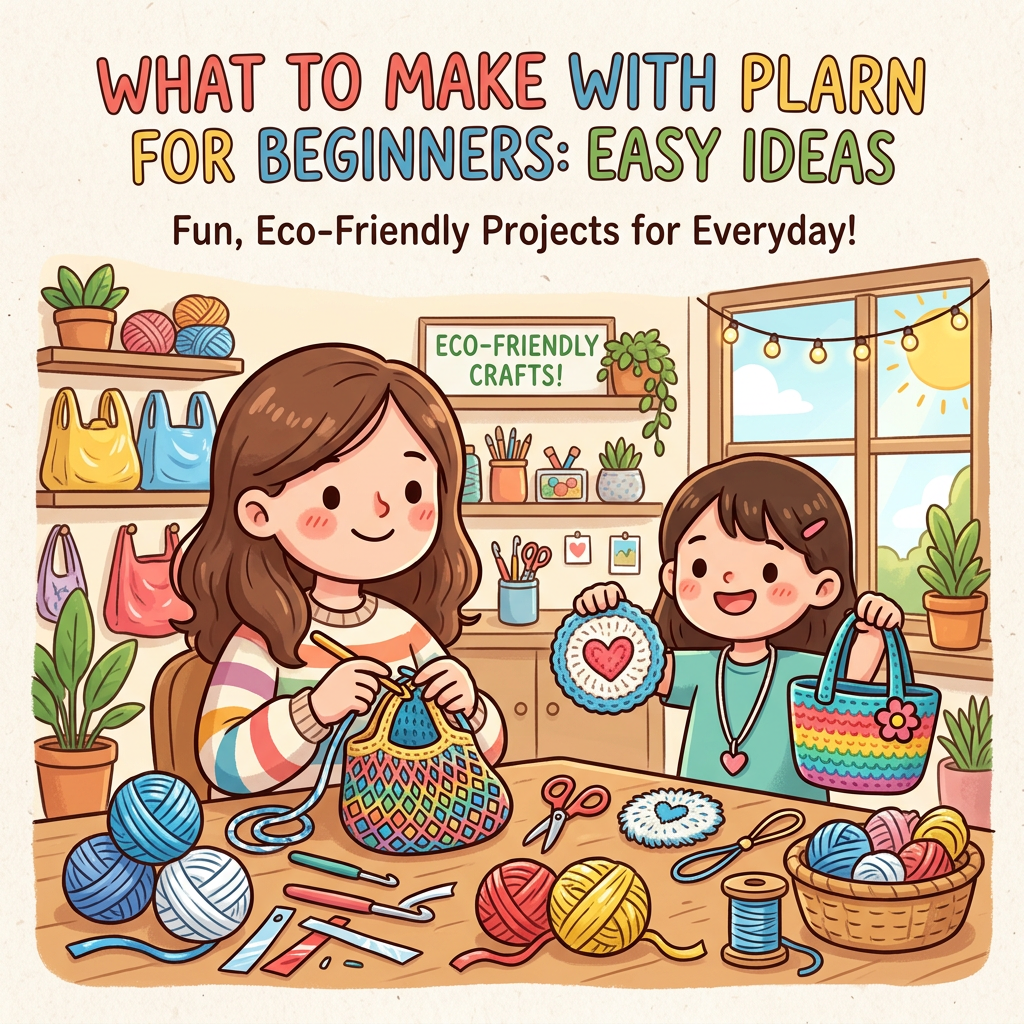
What to Make With Plarn for Beginner Crafters
If you’re wondering what to make with plarn for beginners, this guide covers easy plarn projects that turn recycled plastic bags into coasters, baskets, market bags, floor mats, and storage bins. If you’ve ever saved a pile of bags and wondered what to do with them, plarn gives them a second life without much cost.
People like plarn because it’s cheap, strong, and easy to clean. The best plarn projects for beginners depend on three things: your skill level, how much strength you need, and whether you want a neat look or a colorful mixed-bag style. Start with the right match, and plarn feels far less tricky.
Beginner-friendly project ideas that help you build confidence
Plarn doesn’t behave like cotton or wool. It can be slick, stiff, stretchy, or thick, depending on the bags you cut. Because of that, small projects make the best first step.
They help you learn how tightly to stitch, how flat the fabric lies, and how the joins feel in your hands. You also use less material, so mistakes don’t sting as much. That’s a good trade when you’re still figuring out your cutting width and tension.
A quick guide helps narrow down your first project:
| Project | Best for | What it teaches |
|---|---|---|
| Coasters | First-time users | Tension, flat circles, joins |
| Trivets | Slightly thicker plarn | Heat-safe layering, shape control |
| Small mats | Practicing rows or rounds | Even edges, stitch rhythm |
| Storage bowls | Learning structure | Building sides, firmness |
The pattern matters less than the practice. Early projects are where you learn what your plarn wants to do.
Make coasters, trivets, and small mats first
Coasters are one of the easiest things to make with plarn because they are small and forgiving. You can finish one fast, then adjust your strip width on the next try. If the coaster curls, your stitches may be too tight. If it feels floppy, the plarn may be too thin or your hook too large.

Trivets work well when you want a thicker result. A plarn trivet is better for cool dishes or as a surface protector than for direct heat from hot cookware. It’s a great project for practicing layered fabric and firm stitches.
Small mats are another smart first project. A little mat by a pet bowl or under a plant tray gives you room to test rows, corners, and shape without committing to a full rug.
Small projects show problems early. That’s useful, because you can fix your cutting, joining, or stitch choice before you spend hours on a bigger piece.
Try simple baskets or storage bowls
Once flat shapes feel easier, move to a small bowl or basket. This is where plarn starts to show one of its best traits: structure. Even a basic round bowl can feel sturdy if your stitches are tight and your strips are thick enough.

These containers are useful right away. Because the scale is small, you can test how high the sides stand without using a mountain of bags.
They also teach an important plarn lesson: shape comes from firmness. If the bowl slumps, the material may be too soft, or the stitch may be too loose. That’s easy to spot on a tiny basket. It’s much harder to correct on a big storage bin.
Why smaller projects are the best practice before bigger ones
Starting small saves time, but it also saves material. That matters when you’re cutting bags by hand and trying to sort colors that don’t always match. A coaster or bowl lets you use what you have, then decide if the plarn is worth repeating on a larger piece.
Small work also helps you judge comfort. Some plarn feels fine for ten minutes, then gets hard on the hands after an hour. You’d rather learn that on a trivet than halfway through a tote bag.
Most importantly, these first projects give you honest feedback. You learn if the strips are too narrow, too wide, too slick, or too brittle. Once you know that, you can choose larger projects with more confidence and less waste.
What to make with stronger plarn when you need more durability
Some projects need more than a pretty surface. If the item will carry weight, sit on the floor, or hold its shape every day, you need firmer plarn and tighter stitches. Function should guide the build.
That often means cutting wider strips, choosing stronger bags, and avoiding loose, lacy patterns. Dense fabric lasts longer. It also keeps the item from stretching out after a week of use.
Grab your Free Guide!
This guide will walk you through all of the steps to create your first ball of plarn!
How to:
- choose the right bags
- clean them
- cut them
- store them
Market bags that can carry real weight
Market bags are one of the most popular plarn projects for a reason. They are useful, reusable, and a natural fit for plastic-bag yarn. You’re taking old shopping bags and turning them into a stronger shopping bag.

Still, a market bag has to work hard. Loose netting can stretch too much if the plarn is soft, so many makers prefer a denser stitch for the base and lower sides. Handles also need extra care. Reinforced handles and strong joins keep the bag from pulling apart when it’s full of produce, cans, or a loaf of bread.
If you plan to carry real weight, test the bag before regular use. Fill it at home first. A trial run tells you more than the pattern does.
Floor mats and sink mats for hard-wearing use
Plarn shines in places where moisture and mess are common. A floor mat by a back door, laundry area, or utility sink can take daily wear and wipe clean fast. That’s hard to beat for a material that started in the recycle bin.
These mats work best with thicker strips and a dense stitch pattern. A loose mat may slide or bunch, while a firmer one stays flatter. Texture also helps. Slight ridges from simple stitches can add grip underfoot.
Under-sink mats are an overlooked idea. They protect shelves from drips and are easy to rinse or replace.
Storage baskets and bins that hold their shape
Big baskets need firmness more than fancy detail. If the sides collapse, the bin won’t do its job. That means this project rewards thicker, sturdier plarn and close stitches that create a more rigid wall.
These bins are useful in almost any room. You can use them for yarn, pet toys, toiletries, pantry packets, or rolled washcloths. They also make good market items because buyers like storage pieces that are both washable and handmade.
Keep the shape simple at first. Straight sides or a gentle taper are easier to build than curves. Once you know how your plarn behaves, you can size the basket up or down without much trouble.
Projects that look best with mixed colors and leftover bags
Perfect color matching is rare with plarn, and that’s part of its charm. Most people collect bags in bits and pieces, so mixed colors are normal. Instead of fighting that, use it as a design choice.
Busy color changes can make a plain project feel lively. They also hide joins and slight shifts in bag thickness better than a single-color piece does. That’s helpful when your supplies come from many stores and many bag types.
Stripe patterns, color blocking, and random blends
Color changes look best when they seem planned, even if they came from leftovers. Stripes are the easiest option. Change colors every few rows, and the result looks neat without much effort.
Color blocking works well for totes, mats, and bins. You might make the base one shade, the middle another, and the handles a darker mix. This gives the piece a clear shape, and it keeps odd bag colors from looking accidental.
Random blends can also look great. If your bag stash has no pattern at all, lean into that. Varied color can feel casual and playful, especially on home items where perfection isn’t the goal.
Best items for busy, multicolor plarn
Some projects look better with mixed colors than others. Baskets handle color shifts well because the shape carries the design. Rugs and mats also hide random changes nicely, since the texture breaks up the surface.
Tote bags are another good match for leftover plarn. A multicolor tote feels cheerful, and color changes can hide wear over time. Pet mats, drawer organizers, and laundry-room bins also benefit from a less polished look.
If you want a clean, gift-ready style, save similar bags for one project. If you want to use every scrap, choose practical items where color variety adds personality instead of looking messy.
How to use leftover plastic bags without wasting any
Short lengths and odd colors don’t need to sit in a box forever. Join them into striped sections, or save them for small items like coasters and drawer trays. Mixed leftovers are often enough for finishing rounds, handles, or trim.
It helps to sort bags by thickness before color. A pale blue bag and a white bag can work together if they feel similar in your hands. On the other hand, matching colors with wildly different stretch can make a project look uneven.
Treat color changes as part of the design. When you stop trying to hide every switch, the work gets easier. That mindset also helps you use nearly every usable strip, which is one of plarn’s best strengths.
Grab your Free Guide!
This guide will walk you through all of the steps to create your first ball of plarn!
How to:
- choose the right bags
- clean them
- cut them
- store them
Key Takeaways
The best plarn project depends on what you need the item to do. Small pieces are great for practice, while bags, mats, and bins need stronger strips and firmer stitches.
Color also shapes the choice. If you want a clean look, sort your bags with care. If you want to use leftovers, lean into stripes or a mixed-color finish.
When the project matches the material, plarn works well for both learning and everyday use. A pile of old shopping bags can turn into something sturdy, useful, and worth keeping.
If you enjoy turning waste into craft supplies, the same mindset works for old clothing. Eco-friendly t-shirt yarn turns worn shirts into a soft, bulky yarn for baskets, rugs, and coasters without buying new materials.